Mind the Gap: A Comprehensive Guide
Mind the gap, or occasionally watch the gap, serves as a crucial safety announcement for rail passengers, urging caution when navigating the space between the train and platform․
This warning, initially implemented in 1968 on the London Underground, remains strongly linked to the UK, particularly due to its distinctive phrasing․
Historical Origins of the Phrase
The story of “Mind the gap” isn’t rooted in a long-standing railway tradition, but rather a pragmatic response to evolving technology and safety concerns on the London Underground․ Before 1968, conductors and station staff routinely cautioned passengers verbally as they boarded and disembarked trains, warning them to be careful of the space between the train and the platform edge․ However, the introduction of automated trains necessitated a new approach to passenger safety announcements․
The increasing automation meant relying less on manual announcements from staff․ This shift prompted the search for a concise, easily understood warning that could be consistently delivered․ The phrase “Mind the gap” emerged as the solution, born not from historical precedent, but from a practical need to maintain passenger safety in a changing railway environment․ It was a deliberate creation, designed for clarity and impact․
Interestingly, the phrase’s unique phrasing contributes to its strong association with British railways, as the verb “mind” in this context has become less common in American English․
The 1968 Implementation on the London Underground
In 1968, the London Underground embarked on a significant modernization project, introducing automated train operation on several lines․ This automation presented a challenge: how to continue providing crucial safety warnings to passengers without relying on the consistent presence of train operators making verbal announcements․ The solution was the systematic implementation of the pre-recorded “Mind the gap” message․
Initially, the phrase was rolled out on the Northern Line, and gradually expanded to other parts of the Underground network․ This wasn’t simply a matter of recording a message; it involved integrating the announcement into the newly automated systems․ The timing and delivery of the warning were carefully calibrated to coincide with train arrivals and departures, maximizing its effectiveness․
The choice of “Mind the gap” was also influenced by practical considerations, as the phrase’s brevity was essential for fitting within the limitations of early recording technology and ensuring clear audibility within the noisy station environments․
Oswald Laurence and the Automated Announcement System
Oswald Laurence, a commercial voice-over artist, became inextricably linked with “Mind the gap” through his recording of the iconic phrase for the London Underground in 1968․ He was commissioned to create the announcement as part of the introduction of automated train operation, replacing the need for manual announcements by train drivers and station staff․

Laurence’s recording was chosen due to its clear diction and reassuring tone, qualities deemed essential for a safety message․ The system utilized solid-state electronics – a relatively new technology at the time – to play the pre-recorded message as trains approached stations․ This innovative approach ensured consistent and reliable delivery of the warning․
Interestingly, Laurence was initially paid a modest fee for his work, unaware of the enduring cultural impact his voice and the phrase would achieve․ His recording became the standard “Mind the gap” announcement for decades, solidifying its place in British railway history․
Technical Constraints and Phrase Length
The selection of “Mind the gap” wasn’t arbitrary; it was heavily influenced by the technical limitations of the automated announcement system being implemented on the London Underground in 1968․ Early solid-state electronic equipment had limited storage capacity, making lengthy announcements impractical and expensive․
Consequently, a concise warning was paramount․ The phrase needed to be short enough to fit within the available memory and still be easily understood by passengers․ A shorter message also facilitated its inclusion as painted signage on platform edges, reinforcing the visual reminder․
The brevity of “Mind the gap” proved ideal, balancing clarity with technical feasibility․ Alternatives were considered, but this phrase offered the most effective combination of conciseness and impact, ensuring passenger safety within the constraints of the new automated system․
The Role of Solid State Electronics
The introduction of “Mind the gap” coincided with a pivotal shift in technology: the adoption of solid-state electronics on the London Underground․ Prior to this, announcements relied on drivers or station attendants, a system proving increasingly impractical as train frequency increased․
Solid-state electronics, characterized by the absence of moving parts, offered a reliable and automated solution․ This technology enabled the creation of a pre-recorded announcement system, consistently delivering the safety message to passengers․
Oswald Laurence, the engineer responsible, specifically chose solid-state equipment for its dependability․ This innovation allowed for a standardized warning, regardless of personnel changes or operational demands․ The phrase’s success is intrinsically linked to this technological advancement, marking a significant step in railway safety protocols․
Variations in Wording: “Mind the Gap” vs․ “Watch the Gap”
While “Mind the gap” is the overwhelmingly dominant phrase, a less common variant, “Watch the gap,” also exists․ Both serve the same purpose – alerting passengers to the space between the train and the platform edge – but their prevalence differs significantly․
“Mind the gap” is deeply ingrained in British railway culture and has become a globally recognized symbol of London․ “Watch the gap,” however, sees limited usage, primarily as an alternative phrasing within the UK system․
Notably, the distinction extends geographically․ In American English, “Watch your step” is the preferred warning, rendering both “Mind the gap” and “Watch the gap” relatively unfamiliar․ The choice of wording reflects linguistic preferences and established safety communication norms in different regions․

Regional Differences: UK vs․ US Usage
The usage of “Mind the gap” demonstrates a striking contrast between the United Kingdom and the United States․ In the UK, particularly on the London Underground where it originated, “Mind the gap” is ubiquitous – an instantly recognizable and culturally significant phrase․
Conversely, in the US, the phrase is largely unknown․ American railway systems almost exclusively employ “Watch your step” as the standard warning for passengers boarding and disembarking trains․ This difference isn’t merely a matter of preference, but reflects diverging linguistic conventions․
The verb “mind,” in the context of “Mind the gap,” has largely fallen out of common usage in American English, contributing to the preference for the more straightforward “Watch your step․” This linguistic shift explains the phrase’s limited adoption across the Atlantic․
Decline of “Mind the Gap” in American English
The absence of “Mind the gap” in American railway announcements isn’t a recent development, but rather a consequence of evolving linguistic patterns․ The specific usage of “mind” – meaning “to be careful” or “to pay attention to” – has diminished significantly in American English since the mid-20th century․
While historically understood, the phrasing felt increasingly archaic and less intuitive to American ears․ Consequently, railway authorities opted for the clearer and more contemporary “Watch your step,” which directly instructs passengers on the necessary precaution․
This shift wasn’t driven by safety concerns, but by a desire for communication that resonated with the prevailing linguistic norms․ The phrase simply didn’t integrate naturally into the American lexicon, leading to its practical abandonment in favor of a more readily understood alternative․
Prevalence of “Watch Your Step” in the United States
“Watch your step” has become the standard cautionary phrase employed on American rail systems, effectively replacing any potential use of “Mind the gap․” This preference stems from its directness and clarity, aligning with contemporary American English usage․ The instruction is universally understood, requiring no contextual interpretation, and immediately conveys the necessary safety precaution to passengers․
Unlike “Mind the gap,” which relies on a less common verb usage, “Watch your step” utilizes straightforward language, ensuring broad comprehension across diverse demographics․ This simplicity is crucial in a public transportation setting where rapid and unambiguous communication is paramount․
The phrase’s widespread adoption reflects a pragmatic approach to passenger safety, prioritizing clarity and immediate understanding over adherence to potentially unfamiliar or outdated linguistic conventions․ It’s a testament to the power of accessible language in ensuring public well-being․
The Physical Gap: Causes and Dimensions

The physical gap between train and platform arises from several infrastructural factors․ Curvature of the track is a primary contributor, as trains navigate bends, increasing the distance from the straight platform edge․ Variations in platform construction and age also play a role, with older stations often exhibiting larger, less consistent gaps․
Typical gap measurements average around 30 centimeters (approximately one foot), though this can fluctuate significantly depending on the specific station and line․ Some locations may present gaps exceeding this standard, necessitating heightened passenger awareness․
Train design and wheel profiles also influence gap size․ The interplay between these elements creates a complex geometric challenge for railway engineers․ Addressing these gaps is crucial for passenger safety, prompting the implementation of warnings like “Mind the gap” and physical modifications to platforms․
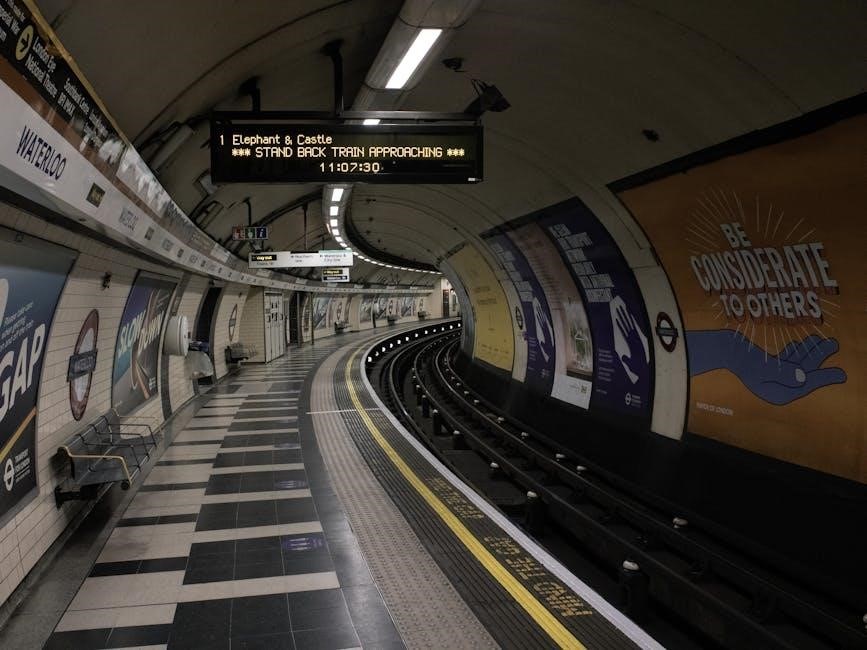
Platform and Train Alignment Issues
Precise alignment between train and platform is a constant challenge in railway operations․ Factors like track geometry, including curves and gradients, contribute to misalignment․ The design of train bogies and wheelsets, while optimized for smooth running, inherently introduce variations in positioning relative to the platform edge․
Wear and tear on both tracks and train components exacerbate these issues over time; Regular maintenance and track adjustments are essential, but complete elimination of misalignment is often impractical․ This is particularly true on older railway networks with legacy infrastructure․
Consequently, a gap inevitably exists, demanding passenger vigilance․ The “Mind the gap” warning serves as a critical reminder of this inherent misalignment, prompting caution during boarding and alighting․ Addressing these alignment issues remains a priority for railway safety․
Typical Gap Measurements (e․g․, 30cm/1 foot)
The size of the gap between train and platform varies considerably depending on station design and railway infrastructure․ However, a common measurement frequently encountered, particularly on the London Underground, is approximately 30 centimeters or 1 foot (roughly 300 millimeters)․
This dimension isn’t a universal standard; gaps can range from a few centimeters to significantly larger distances in older or less frequently updated stations․ Curved platforms often present wider gaps due to the train’s geometry negotiating the bend․
The “Mind the gap” warning is crucial regardless of the precise measurement, as even seemingly small gaps pose a tripping hazard․ Consistent signage and audible announcements are vital to ensure passenger awareness and prevent accidents, emphasizing caution at all platform edges․
Safety Concerns and Passenger Awareness
The primary safety concern addressed by the “Mind the gap” warning is the risk of passengers tripping or falling while boarding or alighting trains․ This is particularly relevant for individuals with mobility issues, those carrying luggage, or passengers who are distracted․
Passenger awareness is paramount; the consistent repetition of the phrase, both audibly and visually, aims to instill a habit of caution․ The warning serves as a constant reminder to pay attention to the platform edge․
Effective signage, coupled with clear announcements, significantly reduces the likelihood of accidents․ Stations continually assess and improve safety measures, including platform edge markings and lighting, to enhance passenger safety and minimize potential hazards associated with the gap․
Global Adoption of the “Mind the Gap” Warning
While originating on the London Underground, the concept of warning passengers about the gap between train and platform has seen global adoption, though not always with the iconic “Mind the gap” phrase․ Hong Kong’s Mass Transit Railway (MTR) notably utilizes a similar warning, demonstrating the universal need for such safety messaging․
Other international railways have implemented variations tailored to local languages and cultural contexts․ The core principle – alerting passengers to a potential hazard – remains consistent․ This adaptation highlights the phrase’s effectiveness as a safety measure, transcending linguistic barriers․
The spread reflects a growing awareness of passenger safety standards worldwide, with railways prioritizing clear and concise warnings to prevent accidents and ensure a secure travel experience for all commuters․

Hong Kong and Other International Railways
Hong Kong’s MTR system prominently features a variation of the “Mind the gap” warning, showcasing its international resonance․ However, the phrasing differs, often employing Cantonese or English adaptations suited to the local population․ This demonstrates a practical approach to safety messaging, prioritizing comprehension over direct translation․
Beyond Hong Kong, numerous railways globally utilize similar warnings, though the specific wording varies significantly․ Systems in countries like Singapore, Malaysia, and Australia employ phrases like “Watch your step” or language-specific equivalents․
These adaptations underscore the universal need to alert passengers to the potential hazard of the gap, while acknowledging the importance of cultural and linguistic sensitivity in effective communication․ The core safety principle remains consistent across borders․
Cultural Impact and Tourist Recognition
“Mind the gap” has transcended its functional purpose to become a globally recognized symbol of London and the United Kingdom․ For tourists, hearing the phrase is often a quintessential London experience, frequently captured in photographs and videos as a memorable souvenir․ This iconic status stems from its distinctive phrasing and consistent presence on the Underground․
The phrase’s cultural impact extends into popular culture, appearing in films, television shows, and literature as a shorthand for London itself․ It’s become a playful reference point, demonstrating the phrase’s deep embedding in the collective consciousness․
This widespread recognition highlights how a simple safety announcement can evolve into a cultural touchstone, representing a city’s identity and leaving a lasting impression on visitors worldwide․

The Phrase in Popular Culture
“Mind the gap” has permeated popular culture, appearing in diverse media as a recognizable symbol of London and British culture․ Numerous films and television shows have incorporated the phrase, often used to establish setting or evoke a sense of place․ Its presence extends to music, literature, and even advertising campaigns, demonstrating its broad appeal․
The phrase’s adaptability allows for creative interpretations, sometimes used humorously or metaphorically to represent obstacles or discrepancies․ This playful usage further solidifies its cultural relevance, moving beyond its original safety context․
Its enduring presence in popular media ensures continued recognition and reinforces its status as an iconic phrase, deeply ingrained in the global understanding of London’s identity․
Signage and Visual Reminders
Visual reminders of “Mind the gap” are integral to the warning system, extending beyond the audible announcement․ Historically, the phrase was painted directly onto platform edges, providing a constant visual cue for passengers․ Modern implementations include dedicated wall signs, strategically positioned for maximum visibility․
Furthermore, foot-level indicators, often tiled into the platform surface, offer a direct reminder as passengers disembark․ These tiled designs frequently feature the phrase, reinforcing the safety message at the point of potential hazard․
Over time, signage styles have evolved, reflecting changes in design aesthetics and accessibility standards, yet the core message remains consistent․ These visual cues complement the audio warning, creating a multi-sensory approach to passenger safety․
Wall Signs and Foot-Level Indicators
Wall signs displaying “Mind the gap” are a prominent feature on many platforms, typically positioned at regular intervals to ensure visibility․ These signs often utilize bold lettering and contrasting colors for enhanced readability, even in low-light conditions․ Their placement aims to catch the passenger’s eye before they approach the platform edge․

Foot-level indicators represent a more direct warning system, integrated directly into the platform surface․ Often implemented using tiled designs, these indicators present the phrase at the point where passengers step off the train․
This strategic placement serves as an immediate reminder, particularly useful for those distracted or less attentive․ Both wall signs and foot-level indicators work synergistically to reinforce the safety message and mitigate potential accidents․
Tiled Platform Designs Featuring the Phrase
Tiled platform designs incorporating “Mind the gap” represent a unique and visually integrated approach to passenger safety․ Rather than relying solely on separate signage, the phrase is embedded directly into the platform’s tiled surface, creating a permanent and noticeable warning․
These designs often utilize contrasting tile colors or patterns to make the message stand out, ensuring it’s easily visible even in crowded conditions․ The integration into the platform’s structure offers a subtle yet constant reminder to passengers․
This method is particularly effective as it’s less prone to obstruction or removal compared to traditional signs․ The tiled approach demonstrates a commitment to safety through thoughtful design, enhancing both functionality and the aesthetic of the station environment․
Evolution of Signage Styles Over Time
The presentation of “Mind the gap” signage has undergone a significant evolution since its initial implementation in 1968․ Early iterations were often simple, painted warnings directly onto the platform walls, prioritizing functionality over aesthetics․ These were followed by more standardized, often black-on-yellow, signs affixed to walls at strategic points․
Over time, designs became more sophisticated, incorporating different fonts, colors, and materials․ Modern stations feature a wider variety of signage, including foot-level indicators and illuminated displays, enhancing visibility and accessibility․
The evolution reflects advancements in design principles and a growing understanding of passenger psychology․ Contemporary signage aims to be both informative and visually appealing, seamlessly integrating safety messages into the station environment, while maintaining clarity and impact․